
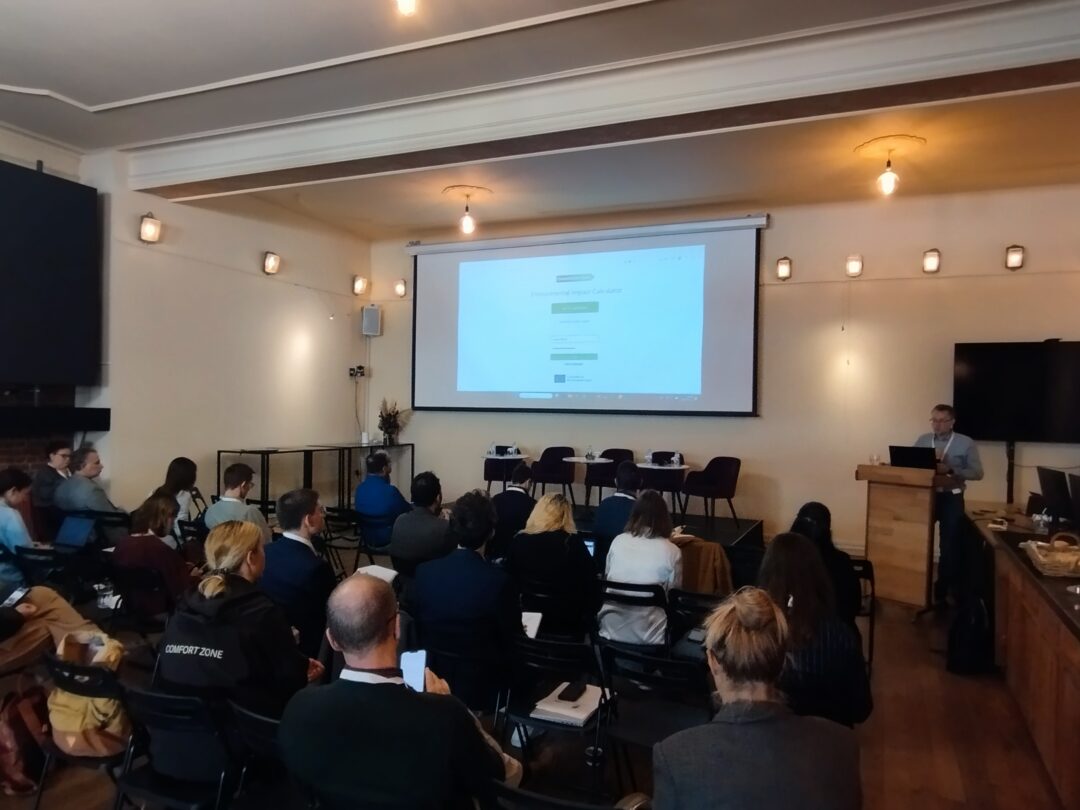
How can European cooperation projects measure their environmental impact and make sustainability part of project management from the start? This was the central question at the GreenEUR final conference, A New Standard for Greener European Projects, held on 14 October 2026.
The event presented the GreenEUR Environmental Impact Calculator and the GreenEUR Label, while opening a discussion on how environmental impact assessment could become a more systematic part of European project management.
Universities shape the people who shape society. Every graduate leaving our institutions will make decisions that affect the climate footprint – and handprint – of others. (from the keynote of Matt Tips)
Although environmental sustainability is a horizontal priority of Erasmus+, assessing the overall environmental impact of cooperation projects remains challenging. Beyond travel, project activities such as accommodation, meetings, digital infrastructure, procurement and dissemination also have environmental consequences.
GreenEUR addresses this gap by developing a framework that combines quantitative environmental impact assessment with qualitative evaluation of sustainability practices. This dual approach recognises that a project’s environmental performance depends not only on its activities and resource consumption, but also on the proactive measures taken by its consortium.
The GreenEUR methodology was tested using data collected from 39 Erasmus+ project coordinators. The analysis revealed substantial differences in environmental impact, including between projects with similar budgets. The findings highlight why project size and funding alone cannot indicate environmental performance. A structured assessment can help coordinators understand their project’s footprint, identify areas for improvement and make more informed decisions.
The GreenEUR Environmental Impact Calculator was presented through a live demonstration. The tool helps project coordinators assess environmental impact across the project lifecycle, including physical and virtual meetings, mobility, procurement, and dissemination activities.
The GreenEUR Label assigns equal weight to quantitative performance and qualitative sustainability efforts, providing a structured way to assess projects and identify improvement opportunities.
The closing discussion addressed a broader question: how could environmental sustainability become a more consistent part of Erasmus+ project management?
Proposals included assessing environmental impact at every project stage, setting benchmarks to compare projects, establishing minimum requirements for transparency and verification, and providing training for project managers and evaluators. Integrating environmental assessment into programme guidance, evaluation criteria and application templates could encourage applicants to plan greener activities from the outset and track progress throughout implementation. The upcoming Erasmus+ programme offers an opportunity to consider these changes. However, effective progress requires more than measurement alone: project teams also need practical guidance, the capacity to use assessment tools and ways to monitor improvements over time.
Making sustainability part of every project
The GreenEUR project provides practical tools to help project coordinators consider environmental impact from the application stage through implementation and final reporting. The broader ambition is to make environmental sustainability a continuous part of project planning, decision-making and evaluation.