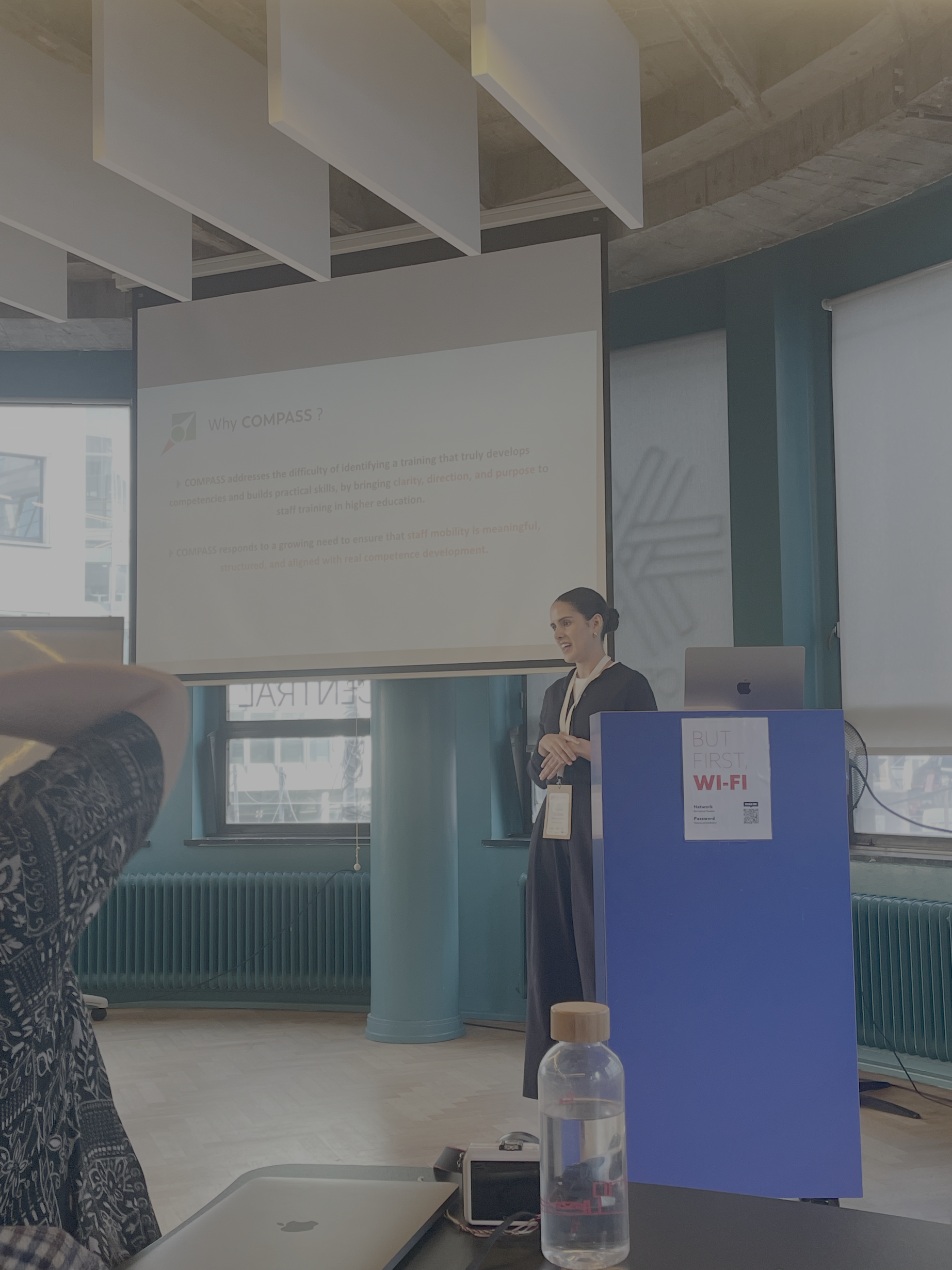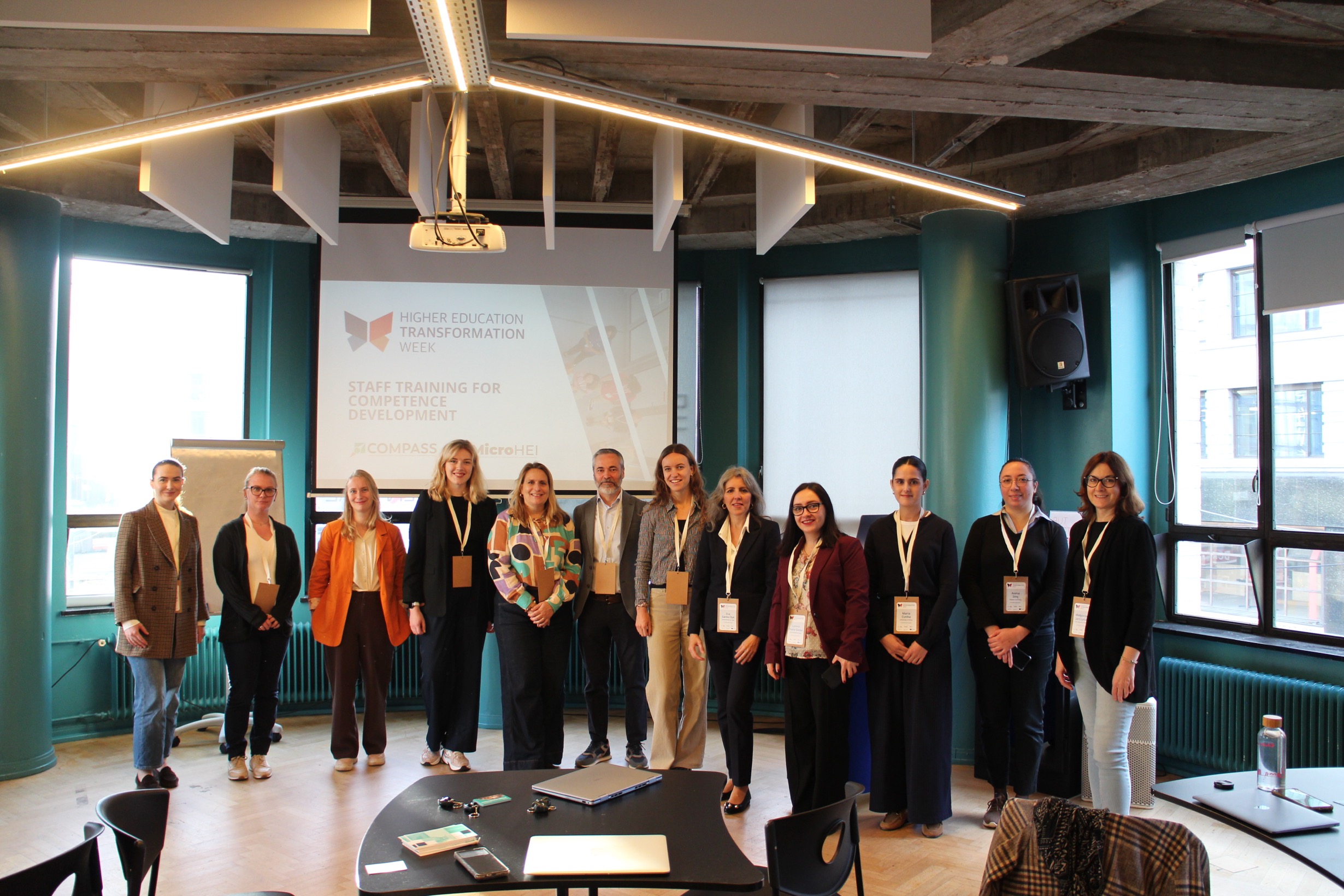
On Wednesday October 14, 2026 COMPASS and MicroHEI held a joint session on Staff Weeks in Higher Education During the Higher Education Transformation Week (HET Week) in Brussels. COMPASS started the session, focusing on quality assurance. MicroHEI then presented the recognition perspective of these training sessions. Together they explored how European cooperation could support the future of competence development for higher education staff.
At the start of the session, all participants introduced themselves and shared their own staff mobility and training experiences. This led to a lively discussion about the wide range of training topics available, the prevalence of training sessions with a more leisure-oriented focus and finding the right balance between intensive learning and social and cultural activities. The group size was smaller, which made the session more interactive.
Martine Wierenga (EUR), coordinator of the COMPASS project, introduced the policy background of the COMPASS project. Afterwards, Maria Cunha (U.Porto) took over to present the work developed so far under WP2, which leads to a quality framework and toolkit for staff training. At the end of the COMPASS presentation, a closing conversation took place about the framework and toolkit. Some key take-aways from the discussion are that participants welcomed the idea of a ready-to-use framework and toolkit that any institution or participant can access; that the results are meant for several audiences: organisers of staff training weeks, potential participants and the institutions and staff who approve participation in training; and that staff training can develop more than skills and competences. Values and social competences also matter and should be kept into consideration.
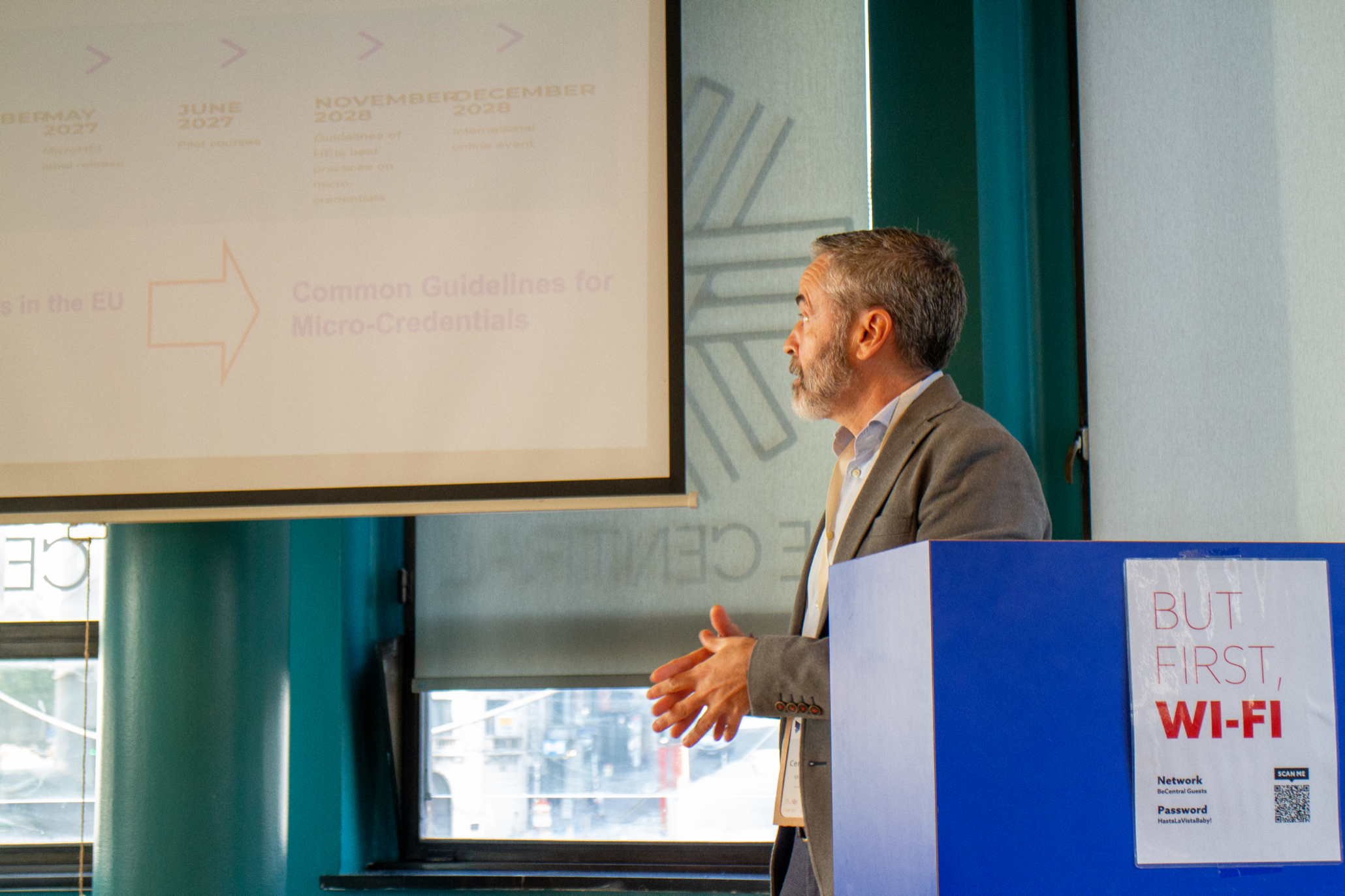
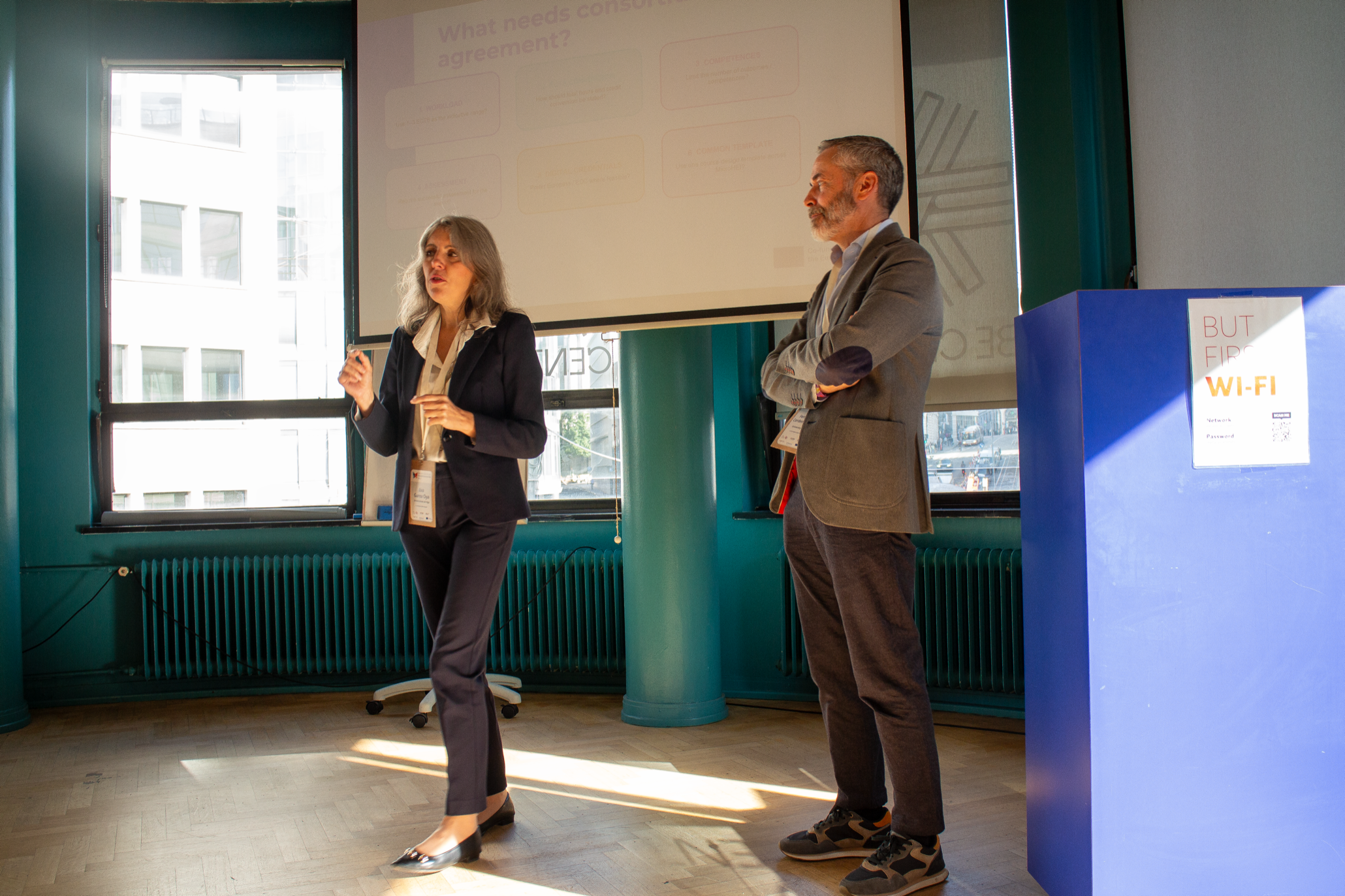
During MicroHEI’s presentation, Fernando Cerdeira Pérez (UVigo) and Eva Garea Oya (UVigo) went over the framework that they are developing for the project. An important overarching topic was accreditation of staff training and the possibility to use ECTS to give formal credits when a training is completed. Pérez went over what is needed for this recognition and what the added value of a formal recognition by an institution could be. This formalization with ECTS could be especially beneficial for career trajectory and future employability.
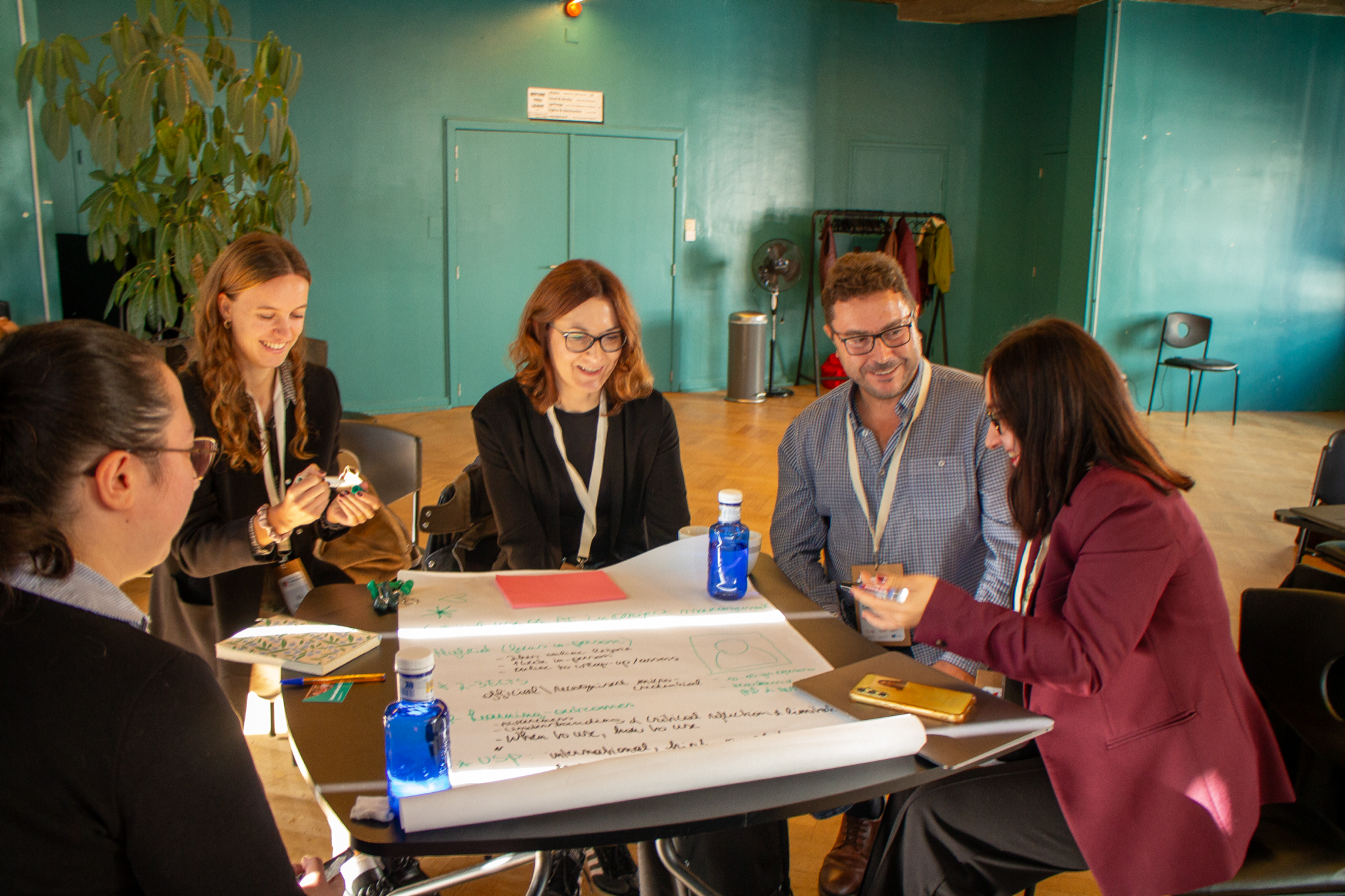
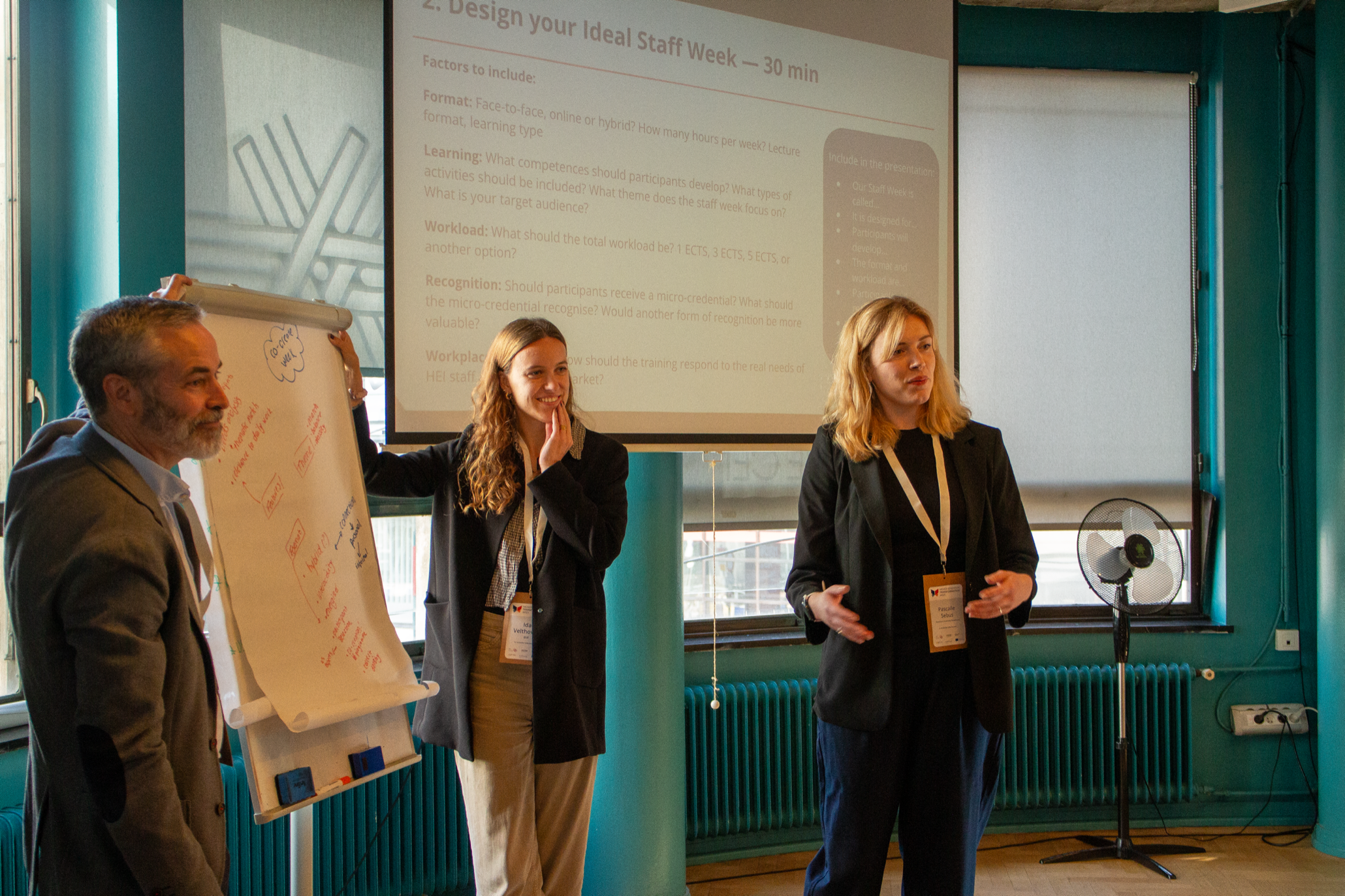
The last part of the session consisted of a workshop that took an interactive approach to designing an ideal Staff Week, exploring both quality assurance and recognition perspectives. Two groups designed a staff training from scratch (topic, target group, duration, format, added value, accreditation and ECTS). In only 10 minutes they produced two well-structured proposals: “Co-create Week” and “Ethical Use of AI in Project Management”.
Over-all the session highlighted how COMPASS and MicroHEI addressed shared challenges from complementary perspectives. It fostered valuable exchanges, fruitful discussions and mutual learning between the two projects and the participants. To conclude, the HET Week session brought great added value to both MicroHEI and COMPASS!