

The latest Student Mobility Summit 2026, hosted at the University of Barcelona, offered an opportunity to reflect on how student mobility is evolving in a rapidly changing context. Alongside discussions on programme rules, funding, and geopolitical uncertainty, the mental health and well-being of mobile students also featured.
Partners from the University of Alcalá contributed to the Mobility Talks on Student Welfare Before, During and After Mobility, sharing insights from the Erasmus+ Mobile Minds in Motion project.
Mental health as a core quality indicator
A key takeaway was that mental health is now widely recognised as a core indicator of quality in mobility programmes. Psychological challenges often stem from acculturation, culture shock, and adaptation stress. While counselling services exist, support for mobile students is often project-based rather than built into institutional structures, highlighting the need for more permanent, coordinated approaches.
The importance of psychological preparation
The discussions emphasised that support must begin long before departure. The pre-mobility phase — especially the learning agreement stage — was identified as a moment when uncertainty and anxiety often peak.
Experts highlighted the value of:
- Psychological readiness sessions
- Active listening approaches
- Clearer communication about expectations and challenges
Preparing students psychologically, not only administratively or academically, was seen as essential. Cross-institutional cooperation was also identified as key to making this preparation more effective and consistent.
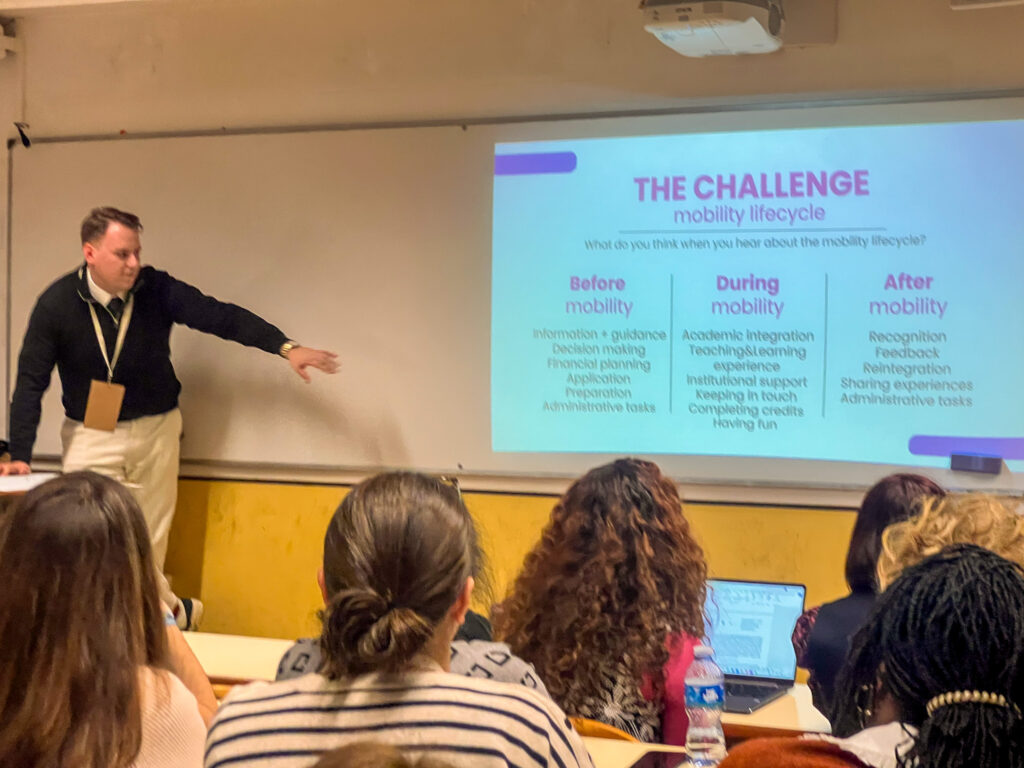
Participants during of the Hackathons of the Student Mobility Summit
Links to mobility dropouts and integration
Mental health also surfaced in discussions on mobility dropouts and student integration. Fear of leaving one’s comfort zone, financial concerns, and uncertainty can all impact participation. Pre-departure sessions and expert guidance were suggested as practical ways to reduce these risks.
Integrating incoming students into local communities benefits from peer engagement and buddy systems. Raising awareness of culture shock and encouraging social participation were recognised as strong protective factors for emotional well-being.
Ultimately, the summit reaffirmed that mobility is not only an academic opportunity but a profound personal and intercultural journey — one that calls for structured, ongoing mental health support.